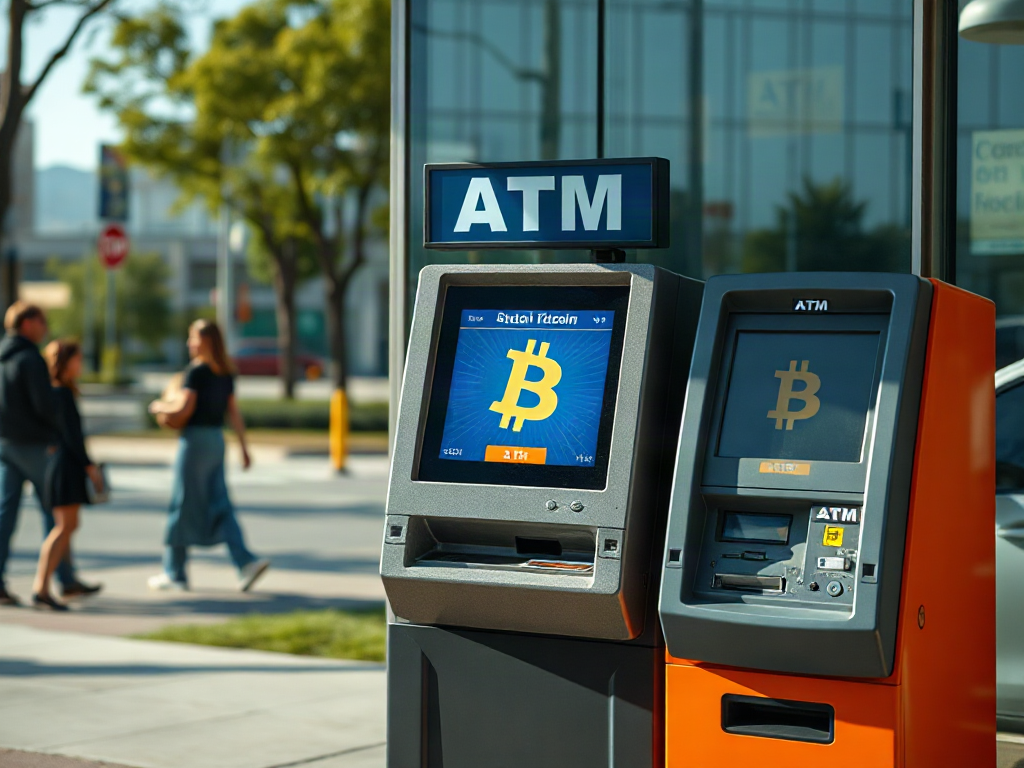
Crypto ATMs process bitcoin transactions by connecting a kiosk payment to an operator’s wallet system, verifying the customer as required, calculating the exchange rate and fees, and broadcasting a transfer to the Bitcoin network. For a purchase, the machine accepts cash or another supported payment method and sends bitcoin to the wallet address supplied by the customer. For a sale, the customer sends bitcoin to an address controlled by the operator and receives cash after the required network confirmation or risk check. The receipt may show a transaction ID, but the transfer is not final until miners include it in a block and the receiving wallet recognizes the confirmation.
What Happens During a Bitcoin ATM Purchase
A bitcoin ATM purchase begins as a retail payment but ends as an on-chain transfer. The machine is a customer interface for an operator’s exchange and wallet infrastructure; it does not create bitcoin or withdraw coins from a physical compartment. After the customer chooses a purchase amount, the kiosk displays the operator’s quoted exchange rate, service charges, transaction limits, and the amount of bitcoin expected to arrive.
The machine then requests a destination address. Most customers provide it by opening a bitcoin wallet on a phone and letting the kiosk scan the wallet’s QR code. The software converts that code into an address and may show a shortened version for review. A careful customer compares several characters at the beginning and end with the address displayed in the wallet. Manually typing a long address is more error-prone, while scanning a QR code is safer only when the code comes directly from a wallet the customer controls.
Depending on the amount, operator, and applicable rules, the kiosk may request a phone number, identity document, photograph, tax identifier, or other information. Completion of these checks does not mean a transaction is endorsed or reversible. It means the operator has applied its account, compliance, and fraud controls before accepting payment.
Once cash is inserted, the ATM counts and validates each note. The screen normally updates the purchase total and estimated bitcoin output as money is accepted. When the customer approves the final amount, the operator’s backend prepares a transaction from an operator-controlled wallet to the scanned address. The transaction is digitally signed with the operator’s private keys and broadcast through a Bitcoin node or wallet service.
A receipt can be produced before the transfer receives a network confirmation. Some operators broadcast promptly, while others process transactions in batches or perform an additional review. For example, a customer may leave with a receipt showing that $200 was accepted even though the wallet still shows an unconfirmed transfer. The useful checks are whether the receipt contains a transaction ID, whether that ID appears in a block explorer, and whether the destination address matches the intended wallet. Treating the printed receipt as proof of final settlement is a common mistake.
Readers comparing kiosk purchases with exchange-based purchases should recognize the tradeoff: an ATM can provide immediate access without funding an online exchange account first, but its total price may include a wide spread and a separate service or network charge. A detailed explanation of How crypto ATMs process bitcoin transactions should therefore distinguish payment acceptance from blockchain settlement.
How Bitcoin Sales and Cash Withdrawals Work
A two-way crypto ATM can buy bitcoin from a customer and dispense cash, but the sequence is the reverse of a kiosk purchase. The machine first creates a sale order and supplies an address controlled by the operator. The customer sends the specified amount of bitcoin to that address, after which the operator decides when the payment has enough evidence of settlement to release cash.
The ATM may print a QR code, display one on screen, or issue a redemption ticket. The customer scans the operator’s address with a mobile wallet, enters the exact bitcoin amount, reviews the wallet’s network fee, and authorizes the transfer. The wallet fee is separate from any spread or service charge retained by the ATM operator. Sending less than the requested amount because the fee was deducted from the amount can leave the order underpaid, so the wallet’s send screen deserves close attention.
Cash is not necessarily dispensed as soon as the wallet says “sent.” A sale transaction first enters the peer-to-peer network and generally remains unconfirmed until it is included in a block. An operator might accept an unconfirmed transaction for a small order, require one or more confirmations, or hold a transaction for review. Its decision can reflect order size, fee level, transaction history, and the risk that an unconfirmed payment could be replaced or fail to confirm promptly.
Consider a machine that creates a sale quote valid for a limited period. If the customer waits too long, sends from an exchange that delays withdrawals, or chooses a fee too low for prevailing network demand, the quote may expire before the operator detects acceptable payment. The operator may recalculate the cash amount, require support review, or provide redemption instructions rather than dispensing money immediately. Sending bitcoin from a self-custody wallet usually gives the customer more control over timing and fees than initiating a withdrawal from a custodial platform.
A sale also depends on the machine having enough notes in the required denominations. Blockchain settlement can succeed even when a dispenser fault or cash shortage prevents immediate collection. The receipt, order number, transaction ID, machine location, and timestamp become critical for resolving that operational problem. Customers should not send a second payment simply because cash was delayed; they should verify the first transaction and contact the operator through independently confirmed contact details.
Not every kiosk supports sales. “Bitcoin ATM” may describe a purchase-only machine, a bidirectional machine, or a service that generates an order but requires later cash redemption. Checking the operator’s instructions before traveling avoids the mistaken assumption that any crypto kiosk can convert bitcoin into banknotes.
Wallet Addresses, Network Fees, and Confirmations
The Bitcoin network processes the blockchain portion of an ATM transaction independently of the kiosk. Once a valid signed transaction is broadcast, nodes relay it and miners decide which pending transactions to include in blocks. The operator can initiate the transfer and select a fee, but it cannot promise the exact moment at which a miner will confirm it.
A wallet address identifies the transaction output that can later be spent with the corresponding private key. The ATM does not need the customer’s seed phrase or private key to send bitcoin. A kiosk, caller, or support agent asking for a seed phrase is a serious warning sign because those words can grant control over the wallet. The legitimate purchase flow requires only a receiving address, while a sale requires the customer to authorize an outgoing payment within the customer’s own wallet.
Network fees are paid for block space and are not calculated as a fixed percentage of the dollar value transferred. Transaction data size and current demand matter more than whether the bitcoin is worth $50 or $5,000. The ATM’s displayed “fee” may instead combine an operator charge, a spread between its quoted rate and a reference market price, and an estimated blockchain cost. Comparing only the line labeled fee can therefore understate the effective cost.
Confirmations measure how deeply a transaction has been recorded in the blockchain. A wallet may first label a transfer pending or unconfirmed, then show one confirmation after its block is mined, followed by additional confirmations as new blocks build on top of it. Policies differ: a receiving wallet may display spendable funds quickly, while an ATM operator may require more settlement evidence before dispensing cash. No fixed waiting time is guaranteed because block production and transaction demand vary.
A block explorer can help separate three different situations. If the transaction ID appears as unconfirmed, the transfer was broadcast but is waiting for inclusion. If it appears confirmed at the correct address, the network portion succeeded even if a wallet interface has not refreshed. If the ID cannot be found after allowing for normal processing, the operator may not yet have broadcast it, the receipt may show an internal order number rather than a transaction ID, or the identifier may have been entered incorrectly.
Address errors deserve priority because confirmed bitcoin transfers generally cannot be canceled by an ATM operator. Before paying, confirm the selected network is Bitcoin rather than an unrelated chain, scan the address from the intended wallet, and inspect the result on both devices. For more detail on the handoff between kiosk software and blockchain settlement, see How crypto ATMs process bitcoin transactions.
Identity Checks, Pricing, Limits, and Operator Controls
ATM requirements are set through a combination of operator policy, transaction risk controls, and rules applicable in the machine’s jurisdiction. A low-value purchase may require limited information at one machine but more extensive verification at another. Customers should not assume that dividing a purchase into smaller amounts avoids verification; repeated or related transactions may be reviewed together, and attempts to evade controls can cause delays or rejection.
Pricing deserves review before cash enters the bill acceptor. Operators can quote bitcoin above the broader market price for purchases and below it for sales. That difference is the spread. A separate service charge may then be added, and the delivered amount may also reflect a network fee. The clearest comparison is the final bitcoin received for the total cash paid, or the final cash dispensed for the bitcoin sent—not the advertised percentage viewed in isolation.
For example, two kiosks may both display a service charge, yet the machine with the lower stated charge can produce a worse result if its exchange rate contains a larger markup. Before confirming, compare the kiosk quote with a current price from an independent market source and calculate the effective rate. Quotes can change during volatile conditions, so the final confirmation screen matters more than a rate seen before the transaction began.
Limits may apply per transaction, per day, per customer, or per phone number or identity. The machine can also reject particular notes, decline an identity document it cannot read, or pause an order for manual review. Support staff may be able to resolve a verification or dispenser issue, but they generally cannot reverse a confirmed transfer sent to the wrong address.
Operator custody introduces another practical distinction. During a purchase, the customer relies on the operator to send bitcoin after accepting cash. During a sale, the customer may send bitcoin before receiving banknotes. This temporary counterparty exposure is different from the protocol risk of the Bitcoin network itself. Prefer a machine that clearly identifies its operator, discloses the quote and charges before payment, provides transaction records, and offers verifiable support details.
Privacy claims should be treated cautiously. Bitcoin transactions are recorded on a public ledger, even though addresses do not automatically display a person’s name. The operator may retain transaction, device, identity, telephone, or camera records according to its policies and legal obligations. “No bank account required” does not mean anonymous, unrecorded, or exempt from reporting and tax obligations.
A Pre-Transaction Checklist and Warning Signs
A safe ATM transaction starts by confirming the recipient and total cost before money or bitcoin becomes difficult to recover. Crypto kiosks are frequently used in payment scams because a fraudster can direct a victim to send funds to an address the fraudster controls. The ATM merely carries out the customer’s instruction; identity checks do not validate the person demanding payment.
Never use a bitcoin ATM to satisfy an unexpected demand from someone claiming to represent a government office, utility, employer, bank, technical-support service, romantic partner, or investment manager. Requests for payment to fix an account, protect savings, release winnings, pay a fine, or prevent arrest are strong reasons to stop. A QR code supplied by another person sends funds to that person’s chosen address, not to a special protected account.
Use this compact check before confirming:
- Identify the operator: Verify its name, posted terms, support channel, and machine location independently.
- Control the wallet: Use an address generated by your own wallet for purchases, and never reveal its seed phrase.
- Review the delivered amount: Compare the final bitcoin or cash output, quoted rate, spread, service charge, and network cost.
- Confirm the direction: Know whether the kiosk is selling bitcoin to you or buying bitcoin from you.
- Keep evidence: Save the receipt, order number, transaction ID, timestamp, and photos of any error message.
Signs that the process is working include an address match, a clear final quote, a receipt tied to the order, and a transaction that appears in a block explorer. A pending status alone does not prove failure. Warning signs include pressure to act quickly, instructions to conceal the transaction, requests for a seed phrase, unclear pricing, a destination address supplied by a stranger, or support contact information pasted over the machine’s original label.
If a purchase receipt appears but no transaction is visible, first determine whether the receipt lists a blockchain transaction ID or only an internal reference. Contact the operator with the reference and payment evidence rather than inserting more cash. If a sale is confirmed but cash was not dispensed, document the machine error and preserve the redemption ticket. Sending another transaction can compound the loss and make reconciliation harder.
A small initial transaction may be sensible when testing an unfamiliar operator, although minimum fees can make small purchases relatively expensive. Anyone prioritizing lower costs, recurring purchases, or advanced order controls may find a regulated online platform more suitable. An ATM is most useful when physical cash access and immediate wallet delivery outweigh its higher potential cost and operational constraints.
Frequently Asked Questions
Does a crypto ATM send bitcoin immediately?
The operator may broadcast promptly, but wallet display and confirmation timing vary. Check the receipt for a transaction ID and use a block explorer to distinguish an unconfirmed transfer from one that has not yet been broadcast.
Can a bitcoin ATM transaction be reversed?
A confirmed transfer generally cannot be reversed by the kiosk operator. An operator may sometimes cancel an unprocessed order or address a cash-dispensing fault, but that is different from reversing blockchain settlement.
Why do bitcoin ATMs ask for identification?
Operators may collect identity information to satisfy applicable compliance duties, transaction limits, and fraud controls. Requirements vary by operator, amount, activity pattern, and jurisdiction.
Why is the amount received lower than the market price suggests?
The final amount may reflect the operator’s exchange-rate spread, a service charge, and a blockchain network cost. Compare the total cash paid with the exact bitcoin delivered rather than looking only at the advertised fee.
What should I do if bitcoin does not appear in my wallet?
Confirm that the destination address is correct, identify the transaction ID on the receipt, and search for it in a reputable block explorer. If it is absent, contact the operator with the order reference instead of repeating the purchase.
Conclusion
Bitcoin ATM transactions involve two connected systems: the kiosk operator handles payment, pricing, verification, and order execution, while the Bitcoin network records and confirms the transfer. Before committing cash or coins, verify the transaction direction, scan the correct wallet address, compare the final quote with an independent market price, and understand what the operator requires before settlement or cash release.
Keep every receipt and distinguish an internal order number from a blockchain transaction ID. If something stalls, inspect the transaction status before trying again. Most critically, stop when another person pressures you to use a kiosk or supplies the destination QR code. The machine cannot judge whether the payment request is legitimate, and a confirmed transfer to a scammer or incorrect address is unlikely to be recoverable.