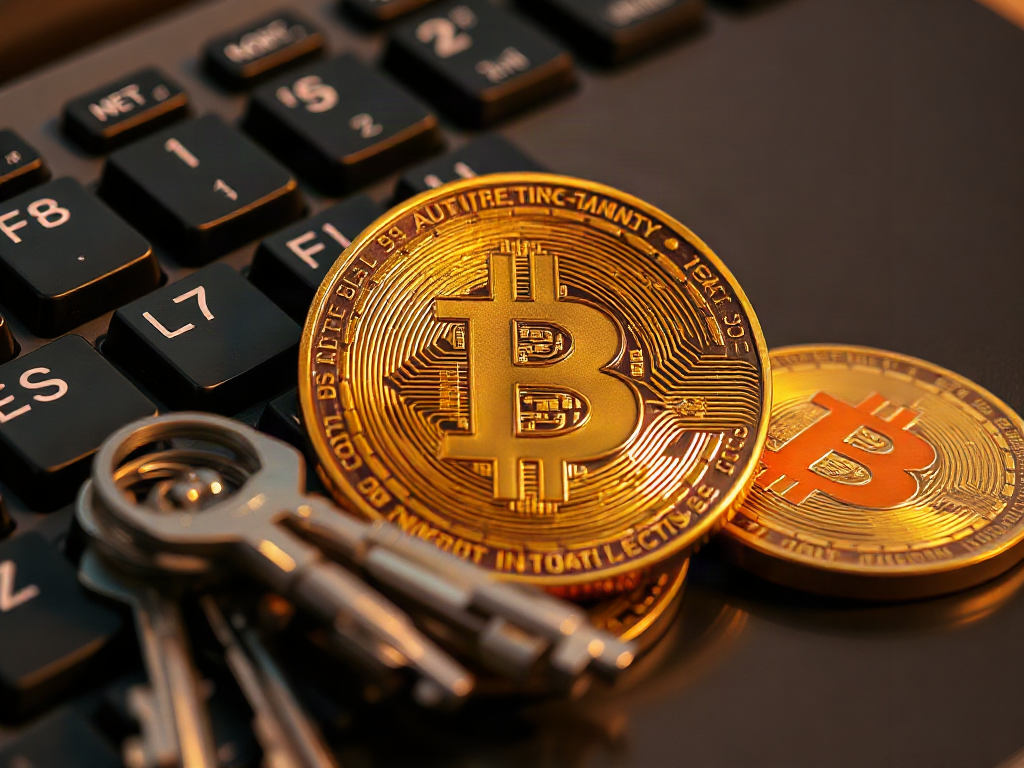
Private keys authorize spending by creating digital signatures, while public addresses receive crypto by identifying destinations recorded on a blockchain. A sender needs the correct private key to approve a transaction, but a recipient can share an address without exposing spending authority. Wallet software manages the relationship between keys and addresses, calculates network fees, and often generates a fresh receiving address for better privacy. Anyone who obtains a private key or recovery seed may control the associated funds, whereas losing that secret can make the crypto permanently inaccessible.
How Do Private Keys Control Spending?
A private key is a secret number that enables a wallet to produce a valid digital signature for a transaction. The blockchain does not need to see the private key itself. Instead, network participants check the signature against the relevant public-key information and transaction conditions. A valid signature demonstrates that the transaction was authorized by someone with the required secret, without revealing that secret to the network.
For Bitcoin, the spendable value is represented by unspent transaction outputs, commonly called UTXOs. When a wallet creates a payment, it selects suitable UTXOs, defines new outputs for the recipient and usually for change, calculates a fee, and signs the required transaction data. Nodes then verify the signatures and other spending rules before relaying or accepting the transaction. The signature authorizes a specific transaction; it is not a reusable password transmitted to miners or recipients.
Consider a wallet holding a UTXO worth 0.01 BTC. Sending 0.003 BTC does not usually subtract that amount from an account balance in place. The wallet may spend the entire 0.01 BTC output, direct 0.003 BTC to the recipient, return the remainder minus the network fee to a change address controlled by the sender, and sign the transaction. A block explorer may therefore show more than one output even though the user intended a single payment.
Possession and authorization are closely linked in self-custody. If another person copies the private key or the wallet’s recovery seed, that person may be able to create valid signatures and transfer the associated funds. The blockchain generally cannot distinguish the original owner from someone using a stolen secret. Conversely, knowing a wallet address, transaction identifier, or balance does not provide the mathematical secret needed to spend.
A common misconception is that a private key must be entered into a website whenever funds move. Established wallet software normally signs transactions internally, and hardware wallets are designed to keep key operations within the device. Typing a seed phrase or raw private key into an unfamiliar site is a strong warning sign. Before approving a transaction, check the recipient, amount, fee, and any destination shown on the wallet or hardware-device screen. A signature may be technically valid even when the user was deceived about what it authorized.
How Do Public Addresses Receive Crypto?
A public address gives a sender a destination that the network can recognize in a transaction output. Sharing it does not transfer funds, contact a wallet, or reveal the private key. The sender’s transaction assigns value to spending conditions represented by that address. After the transaction is broadcast and accepted, the recipient’s wallet detects the relevant output and displays it as pending or confirmed according to the wallet’s rules.
An address is generally derived through cryptographic operations involving public-key or script information, but it should not be treated as interchangeable with a private key. Address formats also vary. Bitcoin addresses may begin with characters such as 1, 3, or bc1, depending on the address type and network. A syntactically valid address can still be wrong for the intended recipient, and an address from another blockchain or test network may be incompatible with the planned payment.
Suppose a buyer scans a merchant’s Bitcoin QR code. The QR code may contain the receiving address and, in some cases, a requested amount. Scanning reduces manual entry, but the buyer should still compare the destination displayed by the sending wallet with the merchant’s trusted display. Clipboard-replacement malware, altered invoices, and incorrect network selection can redirect a payment without producing an obvious spelling error. Checking several characters at both the beginning and end is better than checking only one end, though confirming the full address on a trusted screen is preferable for a high-value transfer.
Public does not mean private or anonymous. A shared address can allow other people to inspect associated transactions and balances through public blockchain data. Reusing one address for wages, donations, purchases, and long-term storage can connect activity that would otherwise be less obviously related. Many modern wallets generate a new receiving address for each payment while continuing to monitor all addresses derived from the same wallet. That improves practical privacy and payment identification without requiring a new backup for every address when the wallet uses deterministic key generation.
The safest receiving process is simple: choose the correct asset and network, generate an address inside the intended wallet, verify it on a trusted device, and share only the address or payment request. For an unfamiliar workflow or a substantial transfer, a small test payment may expose network, custody, or address errors before the full amount is sent. The test adds a fee and an extra transaction, so it is most useful when the consequences of a mistake outweigh those costs.
How Keys, Addresses, and Wallets Work Together
A wallet is primarily a key-management and transaction-signing system, not a container holding coins inside a phone or hardware device. The blockchain records transaction history and spendable outputs. The wallet stores or controls the secrets needed to authorize spending, derives addresses, identifies relevant blockchain activity, and presents the result as a usable balance.
Most current wallets use a recovery seed or seed phrase to derive a hierarchy of private keys, public keys, and addresses. This structure allows the wallet to create many receiving and change addresses from one backup. The seed phrase therefore carries broader authority than one visible address and may restore the entire wallet in compatible software. A single exported private key, by contrast, may cover only one key and can create backup complications if the wallet later sends change to a different derived address.
The distinction becomes clearer when comparing wallet types. A watch-only wallet imports public information and can monitor balances or prepare unsigned transactions, but it cannot complete ordinary spending without the corresponding signing keys. A hot wallet keeps signing capability on an internet-connected device, which is convenient for frequent payments but increases exposure to malicious software. A hardware wallet keeps private-key operations in a dedicated device and asks the user to confirm transaction details, though it cannot protect someone who approves a fraudulent destination or reveals the recovery seed.
| Wallet element | Main function | Safe to share? | Primary risk |
|---|---|---|---|
| Receiving address | Identifies a payment destination | Yes, when needed | Privacy loss or payment to an altered address |
| Public key or account data | Supports verification and address derivation | Only when the workflow requires it | Broader activity tracking |
| Private key | Creates spending signatures | No | Unauthorized transfer if exposed |
| Recovery seed | Restores a deterministic wallet and its keys | No | Loss of the full wallet if copied |
Custodial services change the operational picture. An exchange deposit address may receive funds for a customer, but the service usually controls the underlying private keys and maintains an internal account record. The customer signs in with account credentials rather than signing every blockchain transaction. This may simplify recovery and trading, but it introduces counterparty, withdrawal, security, and policy risks. Self-custody removes that intermediary from authorization while placing backup and transaction responsibility on the user.
Before choosing a wallet, decide who should hold spending authority, how often transactions will occur, and how recovery will work after device loss. A small hot-wallet balance may suit routine spending, while less frequently moved holdings may justify hardware-based signing and geographically separate backups. The arrangement is working when a verified backup can restore the expected addresses and the signing device shows accurate transaction details. Unexpected addresses, missing balances after restoration, or requests to reveal a seed indicate that the process should stop until the cause is identified.
Protecting Spending Authority and Avoiding Costly Mistakes
Security should focus first on private keys and recovery material because those secrets confer spending capability. A strong device password can deter casual access, but it does not neutralize a seed phrase photographed, uploaded, or entered into a phishing page. Backups should remain readable, accurate, and protected from both unauthorized access and foreseeable physical damage. The right storage method depends on the amount at risk, household circumstances, and the user’s ability to maintain the process without creating hidden failure points.
An offline written or durable physical backup avoids routine cloud exposure, but physical storage has tradeoffs. A single copy can be destroyed or lost; several poorly controlled copies increase the chance of discovery. Password managers and encrypted digital storage may be appropriate for some account credentials, yet placing a wallet seed online changes the threat model and may defeat the isolation expected from cold storage. Users should follow the wallet manufacturer’s documented backup process rather than improvising conversions, screenshots, or partial-word schemes that may not restore correctly.
A compact transaction and custody checklist can prevent the most consequential errors:
- Confirm the asset and network. Similar-looking assets may operate on incompatible networks or require service-specific deposit procedures.
- Obtain the address from a trusted channel. Generate it in the recipient wallet or verify it directly with the recipient.
- Inspect the signing screen. Check the destination, amount, fee, and change behavior where the wallet exposes those details.
- Protect every recovery copy. Never disclose the seed to support staff, websites, callers, or direct messages.
- Test restoration safely. Follow the wallet’s documented process without exposing the live seed to an untrusted device.
Multisignature arrangements can divide authorization among multiple keys, such as requiring two valid signatures from three possible signers. This can reduce dependence on one device or one stored secret, but it adds setup, backup, coordination, and recovery complexity. Losing key material, wallet configuration data, or access to a co-signer may still cause serious problems. Multisignature is therefore not automatically safer for someone who cannot test and document the full recovery path.
Social engineering remains a practical threat because attackers often bypass cryptography by persuading users to surrender secrets or approve transactions. Legitimate receiving requires an address, not a private key or seed. Legitimate wallet recovery may require entering a seed into compatible wallet software, but the environment must be trusted and intentionally chosen by the owner—not reached through an unsolicited link. A transaction that cannot be explained, a device displaying a different destination from the computer, or a supposed support agent asking for recovery words is a reason to stop.
Good custody is demonstrated by recoverability and controlled authorization, not by owning a particular device. Keep a record of the wallet type and recovery procedure without recording secrets in the same exposed location. Periodically confirm that backups remain legible and that trusted heirs or designated parties can follow an appropriate access plan if needed. Avoid unnecessary live-wallet recovery tests; use documented, isolated procedures because entering the seed itself creates exposure.
Conclusion
Safe crypto use depends on separating information meant for receiving from secrets that authorize spending. Share a verified receiving address when payment is expected, but keep private keys and recovery seeds out of messages, websites, cloud photos, and unsolicited support interactions. Before sending, confirm the asset, network, destination, amount, and fee on the most trusted display available.
Wallet choice should reflect the value being protected and the owner’s ability to maintain backups. Hot wallets favor convenience, hardware wallets isolate signing, custodians manage keys on a customer’s behalf, and multisignature can distribute authority at the cost of greater complexity. The next practical step is to document the current wallet’s recovery method, verify that backups are accurate and protected, and review how addresses are checked before any meaningful transfer.
Frequently Asked Questions
Can someone steal crypto with only a public address?
A public address normally lets someone view or send funds to that destination, not authorize spending. Theft generally requires private-key access, recovery material, account compromise, or deception that causes the owner to sign an unwanted transaction.
Does a wallet address contain the private key?
No. Wallet addresses are derived from public-key or script-related data through one-way cryptographic processes. The address does not provide a practical route for calculating the corresponding private key.
Should I use a new address for every Bitcoin payment?
Using a fresh receiving address is generally preferable for privacy and payment tracking. A deterministic wallet can generate many addresses that remain recoverable from the same correctly stored seed.
What happens if I lose my private key?
If no valid recovery seed, backup, co-signer, or custodial recovery option exists, the associated funds may become permanently inaccessible. A blockchain operator cannot ordinarily reset a self-custody key.
Why does my wallet show a change address?
Bitcoin wallets often spend an entire UTXO and return the unspent portion to a change address controlled by the sender. A properly functioning wallet tracks that address automatically.